
Shelter & Housing

Moving forward from the impacts of domestic violence is linked to having access to safe and stable shelter and housing. A responsible system provides a full range of shelter and housing resources to assure safety and stability.
FCC provides:
The Emergency Safe Shelter has limited space to provide short-term, anonymous safe shelter to adult victims of domestic violence and their dependent children. While residing in the Emergency Safe Shelter, clients are provided with assistance to meet basic needs and plan for a life after shelter that maintains safety and builds housing stability.
Services include:
- shelter
- meals
- crisis intervention and ongoing counseling
- Case management (housing, advocacy, medical referrals, job preparation, legal advocacy)
- transportation assistance
- access to wellness and enrichment programs.
Fleeing domestic violence and need shelter?
Call 410-828-6390
Not fleeing domestic violence and need shelter?
Call 410-887-8463
Rapid re-housing (RRH) is a program designed to help domestic violence survivors obtain and maintain safe, stable, permanent housing with rental assistance and some flexible financial assistance to overcome barriers toward reaching program goals.
This program can pay for rent and housing-related expenses towards any habitable unit in Baltimore County or surrounding area. The duration is up to 6 months, with a step-down rental assistance program based on individual client needs and funding.
Who is eligible for this program?
- To be eligible, applicants must be experiencing homelessness as a result of fleeing domestic violence.
- Only individual adults or adults with dependents are eligible to receive this funding.
- Additionally, the client must be a Baltimore County resident or staying in a county shelter or hotel with an interest in settling within the Baltimore Metro Area.
How can I access this service?
To get started with Housing, individuals must first connect with an advocate to be referred to the program.
For case managers and other advocates seeking to make a referral for RRH, please contact the FCC Housing Specialist by contacting our main office: 410-285-4357.
If you are currently experiencing a housing crisis due to intimate partner violence, please call 410-828-6390 to be assessed by the Baltimore County domestic violence coordinated entry parallel system (DV CE) for sheltering services.
Housing navigation services assist clients who are facing a housing crisis due to domestic violence in assessing needs and developing plans to identify and obtain safe and stable housing.
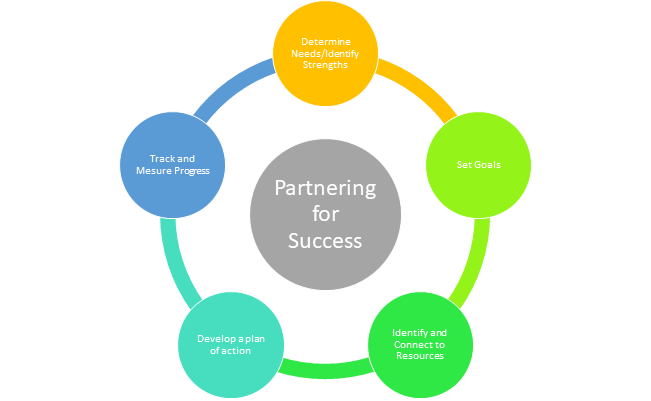
All of our shelter and housing programs have access to ongoing case management. Case Management helps clients to establish and maintain safety while taking steps toward goals. Our staff helps clients identify and assess needs and develop goals. Staff encourage and empower clients' efforts by helping to identify and connect to resources that meet basic needs and plan for a life after crisis that maintains safety and builds housing stability.
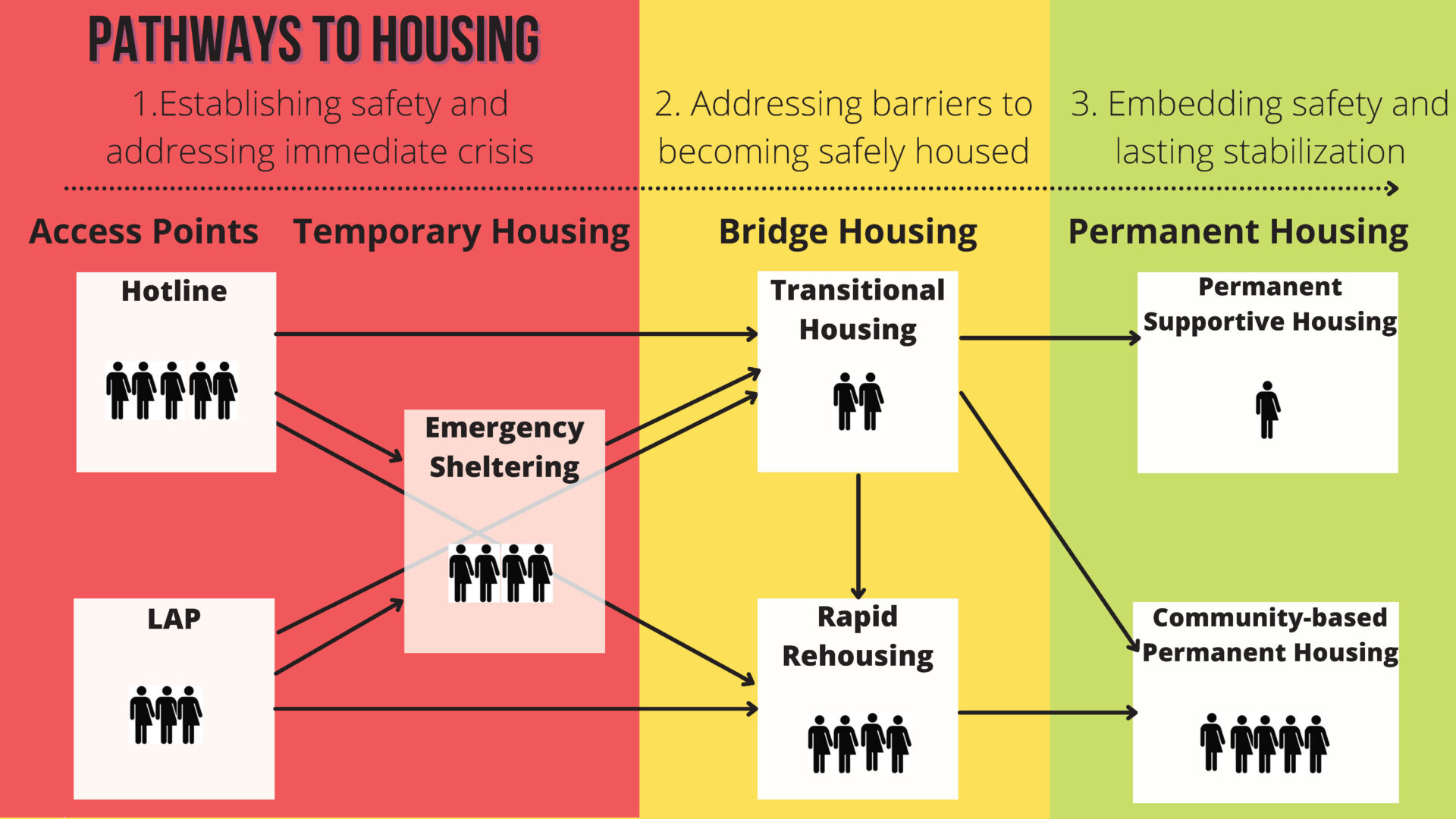
The Family Crisis Center of Baltimore County is leading the way in making sure every individual and family facing domestic violence has accessible and predictable pathways to safe shelter and housing through the Baltimore County DV Coordinated Entry System. Any individual experiencing or at risk of experiencing homelessness due to domestic violence, sexual assault, human trafficking and stalking and victims experiencing a housing crisis due to fleeing domestic violence, sexual assault, human trafficking, and stalking are eligible for the DV CE system.
What is Coordinated Entry?
Coordinated entry is a process in which people that are in danger of experiencing homelessness can access a crisis response system in an efficient way. The main goal of coordinated entry is to make instances of homelessness brief and one time by moving individuals along a continuum from their housing crisis to a long-term housing option. To accomplish this, an assessment process is used where information is gathered pertaining to a person’s level of vulnerability and the challenges which they face that keep them from obtaining and/or maintaining housing. This process is a key element in coordinated entry because it determines how people are prioritized and referred to housing and other mainstream services that tailor to their exact needs.
Communities have been encouraged to create a parallel coordinated entry system to address the concerns of victims fleeing domestic violence, sexual assault, human trafficking, and stalking. The Family Crisis Center is tasked with designing and implementing the Baltimore County domestic violence coordinated entry parallel system (DV CE), which works to simplify the process of getting connected to potential sheltering and housing resources.
To access housing and sheltering services,
call 410-828-6390.